A pinhole leak in an aluminum jon boat, a cracked weld along a riveted seam, a soft transom, or a tear from a rock strike — these are the calls we get every spring and fall around Forest Lake, East Bethel, and the surrounding north-metro lakes. Most of them can be fixed with proper aluminum welding, but only if the hull is sound enough to take the heat and the prep is done right. This is what to know before you decide whether to weld, patch, or replace.
Why aluminum boat hulls fail in Minnesota
Minnesota boats live a hard life. Freeze-thaw cycles, gravel ramps, beached landings, trailer flex over potholes, and decades of vibration all add up. The most common aluminum hull problems we see on-site:
- Hairline cracks at chines, keels, or rivet lines
- Leaking rivets that have worked loose over time
- Cracks at transom corners or around motor mounts
- Tears from rock or stump strikes
- Cracked welds at previous repairs
- Pitting and corrosion thinning the base metal
Repair, patch, or replace — what actually drives the decision
Welding aluminum is not the same as welding steel. The metal conducts heat fast, oxidizes the moment it is cleaned, and goes from solid to puddle with very little warning. Whether your hull is a good welding candidate comes down to a few things we look at on-site:
- Base material thickness and alloy — thin, pitted, or unknown alloys are harder to weld cleanly
- Extent and location of the damage — a crack at a chine is different from a crack in a stressed transom corner
- Whether the crack has been chased before with adhesives, JB Weld, or another weld
- Distortion in the surrounding metal
- Corrosion or galvanic damage near the repair area
- Whether the area can be accessed safely without cutting up the boat
If the base metal is too thin or too far gone, more welding will only make it worse. In those cases we will tell you straight — a riveted patch panel, a section replacement, or, on older hulls, walking away from the repair can be the honest answer.
What a typical mobile aluminum boat repair looks like
1. Inspect the hull dry and clean
We look at the crack, the surrounding metal, and any past repairs. A leak that shows up at one rivet often has friends nearby. Boats that have been wet for weeks need to dry fully before welding — moisture trapped in foam, wood, or seams causes porosity and contamination.
2. Strip and prep the weld zone
Paint, sealant, old adhesive, and the aluminum oxide layer all have to come off. Aluminum re-oxidizes within minutes, so prep happens right before the weld, not the night before.
3. TIG or pulse-MIG weld with matched filler
Most hulls are 5052 or 5086 family aluminum. Filler choice and heat input matter. The goal is full penetration without blowing through or distorting the surrounding panel.
4. Leak test before you launch
A weld that looks good can still seep. A simple water test on the repaired area before the boat goes back on the lake catches problems while the truck is still there.
Transoms, motor mounts, and the stuff that scares us
Transom cracks and motor-mount failures are the repairs we approach most carefully. A transom carries the entire load of the outboard plus the dynamic shock of every wave. If the cracking is structural — running through stressed members rather than a cosmetic skin — the right answer may be a reinforced repair, a fabricated doubler, or replacement. We will not put a weld on a transom and tell you it is fine if it is not. Minnesota DNR boating safety is a reasonable starting point on general boat condition expectations.
Why mobile aluminum welding makes sense for boats
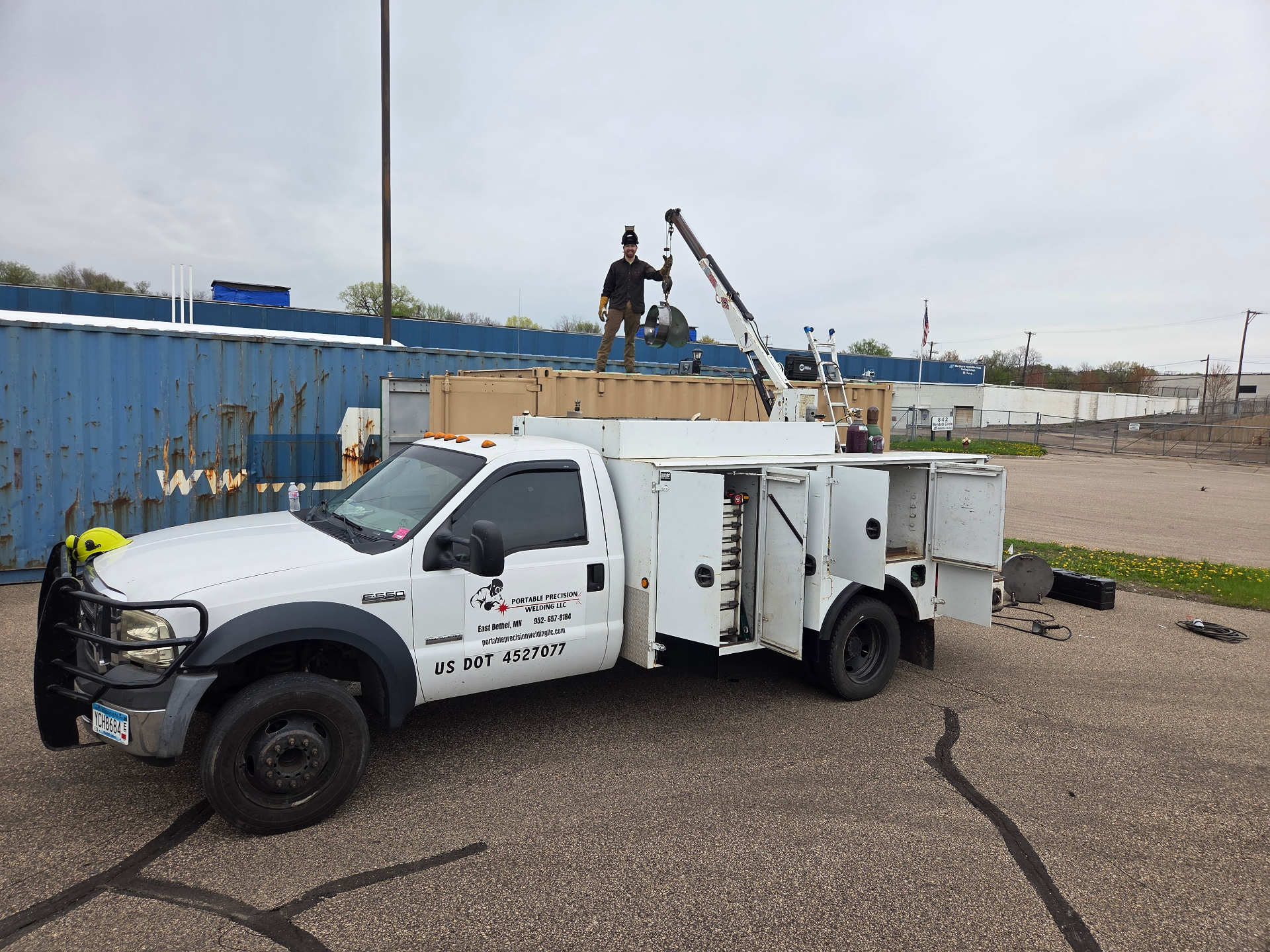
Hauling a boat across the metro to find a welder who actually does aluminum is a hassle. Most lake-country owners would rather we come to the property, the storage yard, or the lift. Our truck is set up to do mobile aluminum welding on-site, with the same gear used in a shop setup. For a broader look at how aluminum work differs from steel, see our piece on mobile aluminum welding, and if it is the trailer rather than the boat that cracked, our boat and personal trailer welding repair guide covers that side.
Service area
Based in East Bethel, MN. Mobile aluminum boat hull repair across Forest Lake, Lino Lakes, Ham Lake, Andover, Blaine, Coon Rapids, Wyoming, Stacy, and the surrounding north-metro lakes country. For city-by-city coverage, see mobile welding in the Twin Cities north metro. Recent aluminum work is on our gallery.
Get a quote for aluminum boat hull repair
Cracked hull, leaking rivet line, or a transom that does not look right? Send a few clear photos of the damage area, the inside and outside of the hull, and a rough hull thickness if you know it. Request a quote from Portable Precision Welding or call now.
Have a job like this in East Bethel, MN?